

Mobile apps

Android and iOS apps, shipped as an MVP first

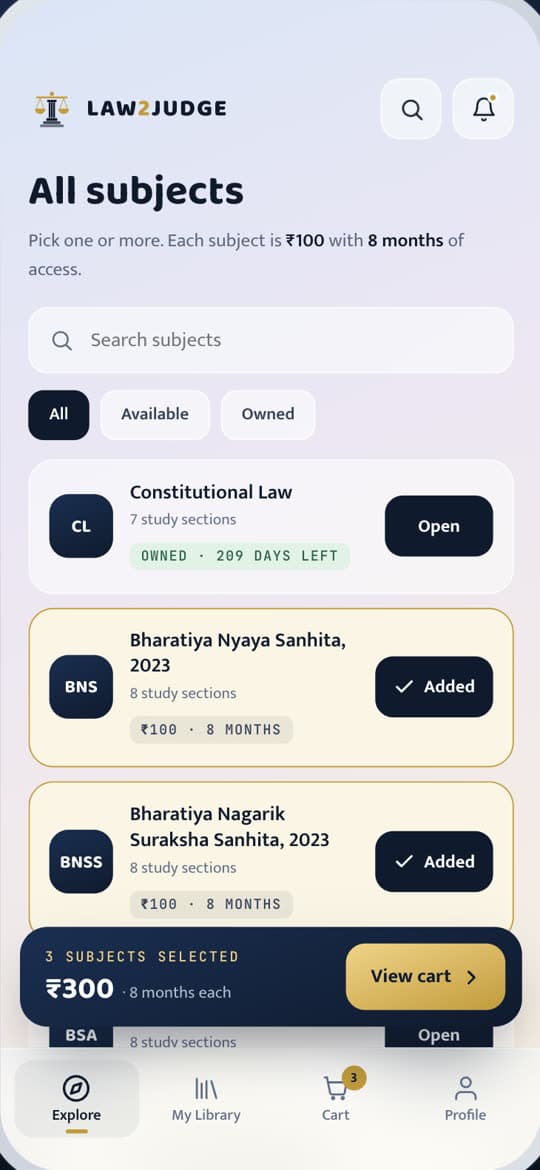
Cross-platform apps built with React Native — one codebase, both stores — with the API, payments, notifications and analytics wired in, and store submission handled for you.

Tell us what the app has to do and we will come back with a scope and a fixed number.

Quick answer

How much does it cost to build a mobile app in India, and how long does it take?

Mana Studio builds cross-platform mobile apps with React Native — one codebase shipping to both Android and iOS — with the API, payments, push notifications and analytics wired in and store submission handled. On the India price list an MVP starts at ₹50,000 and a full product with backend and integrations is ₹1,00,000; beyond that it is quoted to scope, and the number moves with screen count, how much backend is needed and how many external systems it must integrate with. A focused MVP is typically four to eight weeks; a full product with payments, notifications, an admin dashboard and several user roles runs ten to sixteen weeks and is delivered in stages. Play Store and App Store submission — listing copy, screenshots, privacy declarations and the review process — is part of the work. An optional care retainer for OS updates, store policy changes and security patches is published at ₹8,000; the client owns the code either way. Mana Studio is based in Warangal, Telangana, India, works with clients in India, the United States, the United Kingdom and the UAE in English, Telugu and Hindi, and replies to enquiries within one business day.

Last reviewed

MVP from
₹50,000 (India price list)
Full product
₹1,00,000
Care retainer
₹8,000 — optional
Timeline
4–8 weeks MVP · 10–16 weeks full product
Built with
React Native — Android and iOS from one codebase
You own
Code, servers, domain and every key, in your name

The most expensive mistake in app development is building version three before anyone has used version one. We scope apps the other way round: the shortest thing that is genuinely useful goes to a real user first, and everything else is a decision you make with information instead of a guess you paid for.

Almost everything we build is React Native, so Android and iOS come from a single codebase — which is roughly half the build cost and, more importantly, half the maintenance for the rest of the app's life. Where a platform-specific capability genuinely requires it, we build native for that piece rather than pretending cross-platform covers everything.

What goes into the build

Android and iOS from one codebase

React Native, so a feature is written once and shipped to both stores. Native modules where a platform capability genuinely needs them.

The backend behind the app

Node.js APIs, a real database, and an admin dashboard so your team can manage content, users and orders without calling a developer.

Payments and checkout

Razorpay, PhonePe and UPI for India, with the order flow, receipts and failure handling that a payment integration is useless without.

Push notifications

Segmented, scheduled and triggered notifications — the retention mechanism most apps skip and then wonder why nobody comes back.

Maps, location and media

Location-aware features, image and document upload to S3, and offline-tolerant behaviour for patchy mobile networks.

Store launch and maintenance

Play Store and App Store submission, review responses, and OS-update maintenance afterwards — the part that quietly breaks apps nobody is maintaining.

The stack we work in

Mainstream, well-supported technology — chosen so your next developer can pick the project up, not so we are the only ones who can maintain it.

App

  • React Native
  • TypeScript
  • PWA
  • Push notifications

Back end

  • Node.js
  • REST APIs
  • MongoDB
  • Appwrite

Payments

  • Razorpay
  • PhonePe
  • UPI

Release

  • Google Play Console
  • App Store Connect
  • Analytics & crash reporting

How we work

How an app project runs

01

Scope the MVP

We cut the feature list to what has to exist for the app to be worth downloading, and write down what is deliberately in version two.

02

Screens and API

Flows and screens agreed, then the API and data model built to match. Both sides move together so there is no month of integration at the end.

03

Build and test builds

Installable test builds on your own phone every week, so feedback happens while it is still cheap to act on.

04

Store submission and handover

Listing assets, review submission, and every developer account, key and repository transferred to you.

What it costs

App cost is driven by screen count, how much backend sits behind it, and how many third-party systems it has to talk to. The published packages are the starting reference; anything larger is quoted as a fixed price after scoping.

Mobile App Development by industry

The sectors we have shipped work in, and what changes about the build in each one.

Sources & further reading

The primary documentation behind the claims on this page.

Mobile App Development — frequently asked questions

How much does it cost to build a mobile app in India?

An MVP starts at ₹50,000 on the India price list and a full product with backend and integrations is ₹1,00,000. Beyond that it is quoted to scope. The number moves with screen count, how much backend the app needs, and how many external systems it has to integrate with.

Should I build for Android first or both?

Both, in almost every case, because React Native gives you both from one codebase for close to the cost of one. Android-only makes sense when your users are overwhelmingly on Android and you want the cheapest possible test of whether the idea works at all.

How long does an app take?

A focused MVP is typically 4–8 weeks. A full product with payments, notifications, an admin dashboard and several user roles runs 10–16 weeks and is delivered in stages.

Do you handle Play Store and App Store submission?

Yes — listing copy, screenshots, privacy declarations and the review process. Apple's review in particular has rules that are easier to satisfy in the build than to argue about after a rejection, so we design for them from the start.

What happens after launch?

Apps need maintenance whether or not you add features — OS updates, store policy changes and dependency security patches. There is a published care retainer (₹8,000 on the India list) for that, and it is optional. You own the code either way.

Can you build the website and the app together?

Yes, and it is usually cheaper than doing them separately because they share one API and one admin dashboard. See our web development page for the web half.

Get your app development estimate

Tell us what the app has to do and we will come back with a scope and a fixed number.