CRM development
Custom CRM development, shaped around your sales process
Custom CRM and sales platforms for teams whose process does not fit a per-seat product, built around your stages, your fields and your reporting, with no licence that grows every time you hire.
If an off-the-shelf CRM would do the job, we will tell you that on the call.
Quick answer
Should I build a custom CRM or use Zoho or HubSpot, and what does building one cost?
Mana Studio builds custom CRM and sales platforms for teams whose process does not fit a per-seat product — built around the client's stages, fields and reporting, with no licence that grows every time they hire. The honest default is to use the off-the-shelf product, unless one of three things is true: the process genuinely does not fit a pipeline-and-deal model, the per-seat licence across everyone who needs access has grown past what a build costs, or the CRM has to live inside systems the business already runs. Mana Studio gives that comparison in writing and recommends buying where buying is right. A build is quoted to scope after a process-mapping call, as a fixed price against a written scope with no per-user licence afterwards; a first usable version covering the core loop — lead in, follow-up, close, report — is typically six to ten weeks, with further modules, integrations and migrations staged after that so the team is using the system while the rest is built. Existing data from spreadsheets or an old CRM is cleaned, de-duplicated and imported as part of the project, with a reconciliation report. WhatsApp integration runs on the official Business API, attaching conversations to customer records. The code, database, server and every key are in the client's name, and customer data never sits in an account Mana Studio controls. Mana Studio is based in Warangal, Telangana, India, works with clients in India, the United States, the United Kingdom and the UAE in English, Telugu and Hindi, and replies to enquiries within one business day.
Last reviewed
- Pricing
- Fixed price against a written scope, after a call
- First usable version
- 6–10 weeks
- Per-user licence
- None
- Data migration
- Included, with a reconciliation report
- Official Business API, attached to customer records
- You own
- Code, servers, domain and every key, in your name
The honest starting position: for most businesses, a standard CRM is the right answer and building one is a waste of money. Zoho, HubSpot or a spreadsheet that is actually maintained will beat a custom system that nobody finishes. We open every CRM conversation there, and a fair number of them end there.
A custom build earns its cost in three situations. Your process genuinely does not fit the pipeline-and-deal model, field service, admissions, dealer networks, lending, projects with milestones. The per-seat licence has grown past what a build would cost, usually once the operations and support teams need access too. Or the CRM has to sit inside systems you already run, not alongside them, because double entry is the thing actually costing you deals.
What we build is a real application, not a database with forms on it: role-based access, an audit trail, imports that survive messy historical data, and reporting the owner will actually open on Monday morning. And it is yours, the code, the data and the server, with no licence that scales with headcount.
What the first call is usually about
Every one of these is a reason to look at a CRM. Only some of them are a reason to build one, and the first call is mostly about telling them apart.
“Leads live in three places and one of them is somebody’s phone.”
Spreadsheets, a WhatsApp group and a notebook. The cost is not the tooling, it is the follow-ups that never happen because nobody owned the record.
“We pay per user and we keep adding users.”
Worth calculating rather than feeling. Seats times monthly cost times the years you expect to keep it, against a one-time build plus hosting. There is a genuine break-even and it is often further away than people assume.
“Our sales process does not fit the product we bought.”
The real test is whether the mismatch is in fields and stages, which configuration handles, or in rules the product cannot express at all. Only the second justifies building.
“Nobody updates it, so the data is useless.”
Almost always too much data entry for what the salesperson gets back. A built CRM can be shaped around the three fields that matter and capture the rest automatically from calls, forms and WhatsApp.
“We cannot tell which marketing actually produced revenue.”
A tracking problem before it is a CRM problem. Source has to be captured at the point of enquiry and survive all the way to the closed deal, which is mostly an integration job.
“We need it to talk to WhatsApp and our invoicing.”
Usually the deciding factor. What integrates cleanly with what you already run matters more than the feature list.
What a CRM build includes
Pipeline and stages that match reality
Your stages, your qualification criteria, your required fields per stage, including the ones that make no sense in a generic product, like site visit, survey, sample dispatched or documents pending.
Lead capture from every channel
Website forms, WhatsApp, calls, ad platforms and offline entry landing in one place with the source attached, so lead attribution is a report rather than an argument.
Follow-up and task automation
Reminders, assignment rules and escalation when nothing has happened for N days. The point of a CRM is that a lead cannot go quiet without somebody being told.
Quotations, orders and documents
Quote generation with your numbering and terms, approval steps where money is involved, and every document attached to the record instead of somebody's email.
Roles, permissions and audit trail
Who sees whose customers, who can discount, who can export. Plus a record of who changed what and when, which is the feature that matters the day a deal is disputed.
Reporting and dashboards
Pipeline by stage, conversion by source, activity by person, and the two or three numbers the owner actually runs the business on, not forty charts nobody reads.
Migration from what you use now
Spreadsheets, an old CRM, or four different lists. Historical data is cleaned, de-duplicated and imported, because a CRM that starts empty is a CRM nobody adopts.
Integrations with the rest of the stack
WhatsApp Business API, email, telephony, accounting, your website and your app, so the CRM reflects what happened without anyone retyping it.
Buy a CRM, or build one?
Page after page on this subject asserts that custom “pays for itself by month eighteen” without showing the arithmetic. Here is the arithmetic, honestly, including the cases where buying wins. Run it with your own seat count before talking to anybody, including us.
| What to compare | Off-the-shelf CRM | Custom build |
|---|---|---|
| How the cost is shaped | Per user, per month, forever | One-time build, then hosting. The comparison only makes sense over a period: take your seat count times the monthly price times thirty-six months, and put it against build plus three years of hosting and maintenance. |
| What happens as you hire | Cost rises with headcount | Cost is flat. This is the single biggest driver of the break-even point, and why the arithmetic changes completely between a five-person and a forty-person sales team. |
| Time to being useful | Days | Weeks to months. If you need something working this quarter, buy it. You can always build later, and running a bought CRM first tells you exactly what to build. |
| Fit to an unusual process | Whatever configuration allows | Exact, by definition. Worth building only when the process is genuinely a competitive advantage rather than just unfamiliar. |
| Who fixes it when it breaks | The vendor, on their timeline | You, or whoever you retain. A real ongoing cost and it belongs in the comparison rather than being left out of it. |
| Where the data lives | Their platform, their export format | Your own database, in your own account. Matters most if you have data residency requirements or plan to build analytics on top. |
| Integrations | Whatever is on their marketplace | Whatever you are willing to pay to build. A bought CRM with a ready connector to the thing you actually use often beats a custom build on this one point alone. |
Our honest default is buy first, build when you have outgrown it. We will tell you when a configured product plus a couple of integrations does the job for a fraction of a build, and that recommendation ends a lot of these calls before a quote. When you should not build: if you cannot yet describe your sales stages on one page, building a CRM will hard-code confusion rather than fix it.
What it is built on
Mainstream, well-supported technology — chosen so your next developer can pick the project up, not so we are the only ones who can maintain it.
Application
- React
- Next.js
- Node.js
- MongoDB
Access control
- Role-based permissions
- Audit logging
- Team hierarchies
- Field-level rules
Integrations
- WhatsApp Business API
- Razorpay
- REST APIs
- Webhooks
Hosting
- AWS (EC2, S3)
- Nginx
- PM2
- Automated backups
How we work
How a CRM project runs
Process mapping before anything else
We sit with the people who will use it and write down how a lead actually travels today, exceptions included. A CRM built from the org chart instead of the process is the classic failure.
Build vs buy, in writing
You get a straight recommendation, including the per-seat cost of the product alternative over three years against the build. If buying wins, that is the recommendation.
Staged build around the core loop
Lead in, follow-up, close, report, working end to end first. Everything else is added after real users have run the loop for a week.
Migration, training and handover
Historical data imported and reconciled, training for the team that has to live in it, and every account, key and repository transferred into your name.
What it costs
A CRM is quoted to scope after the process-mapping call, a five-stage sales pipeline for one team and a multi-branch platform with approvals are not the same product, and a single published number for “a CRM” would be a fiction. What we can commit to is the shape of the answer: a fixed price against a written scope before any work starts, and no per-seat licence afterwards.
Business systems we have built
Admin panels, order pipelines and internal dashboards from real client projects, the same engineering a CRM is made of.
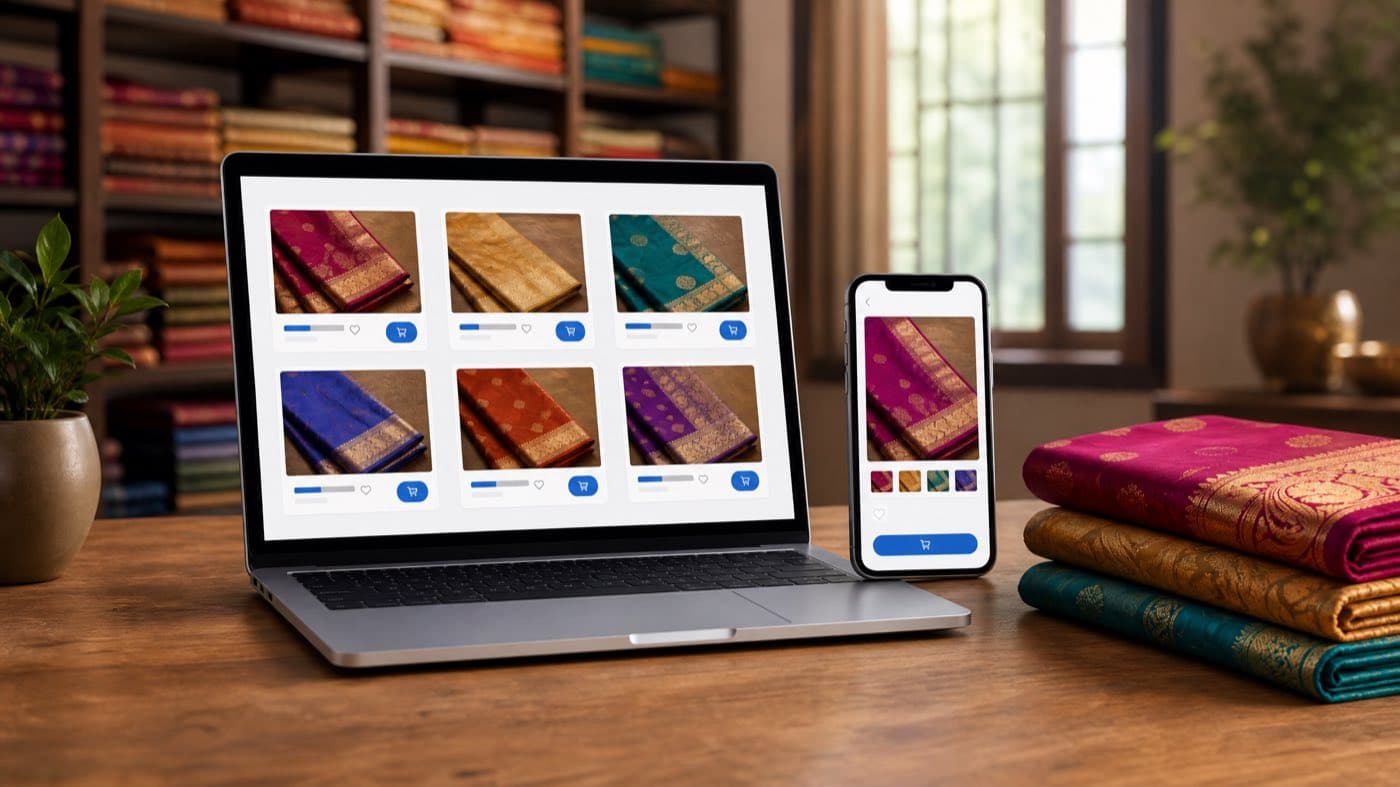
E-commerce
Rami Silks
Full-stack e-commerce platform for traditional Indian clothing with AWS integration and advanced analytics
Next.js · Node.js · MongoDB · AWS S3
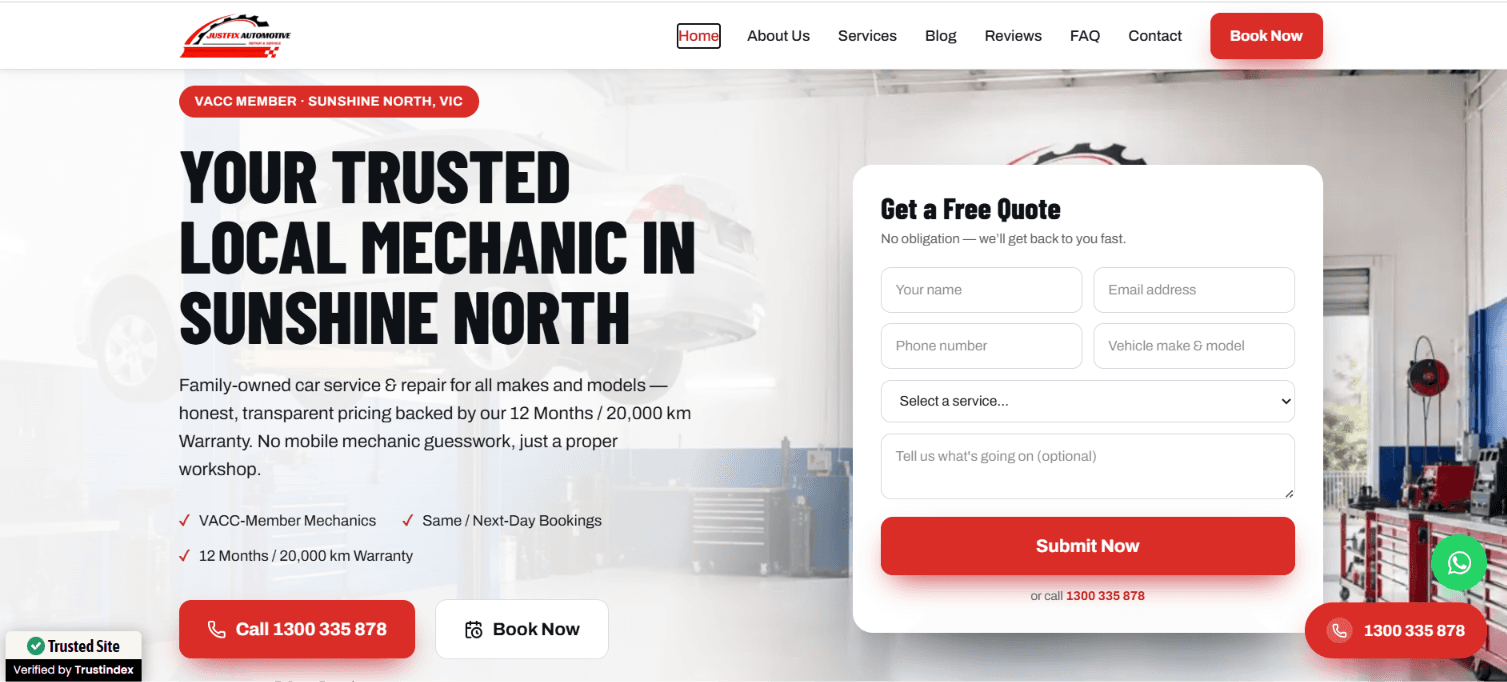
Car Service
JustFix Automotive
Designed and built a fast, user-friendly website for JustFix Automotive, a trusted mechanic workshop in Sunshine North, VIC. We executed a comprehensive on-page and technical SEO strategy optimizing site speed, local schema, and service-page architecture—to boost search rankings, capture high-intent local traffic, and drive online service bookings.
NEXT JS · HOSTING · TAILWIND · MONGODB

Algo Trading
AlgoEdge
Automated PNL reporting platform for Tradetron Creators — real-time MTM tracking, drawdown alerts, and Telegram summaries
Tradetron API · Telegram Bot

Automotive PWA
Sri Laxmi Carz
Pre-owned car dealership platform for a trusted dealer in Warangal — live inventory browsing, certified listings, and an installable PWA with offline access and instant new-arrival notifications
Next.js · PWA · SEO · Push Notifications
CRM Development by industry
The sectors we have shipped work in, and what changes about the build in each one.
Sources & further reading
The primary documentation behind the claims on this page.
Related services
CRM Development — frequently asked questions
Should I build a custom CRM or use Zoho or HubSpot?
Use the product, unless one of three things is true: your process genuinely does not fit a pipeline-and-deal model, the per-seat licence across everyone who needs access has grown past what a build costs, or the CRM has to live inside systems you already run. We give you that comparison in writing, and we recommend buying more often than building.
How much does custom CRM development cost in India?
It is quoted to scope after a process-mapping call, because the range is genuinely wide, a single-team pipeline and a multi-branch platform with approvals and integrations are different products. You get a fixed price against a written scope before any work starts, and there is no per-user licence afterwards.
How long does a custom CRM take to build?
A first usable version covering the core loop, lead in, follow-up, close, report, is typically 6–10 weeks. Additional modules, integrations and migrations are staged after that, so your team is using the system while the rest is built.
Can you move our existing data into it?
Yes, and it is part of the project rather than an extra. Spreadsheets, exports from an old CRM or several separate lists are cleaned, de-duplicated and imported, with a reconciliation report so you can see what came across.
Will it work with WhatsApp?
Yes, through the official WhatsApp Business API — conversations attached to the customer record and templated follow-ups sent from the CRM. For most Indian sales teams that integration is the one that changes daily behaviour.
Can our team use it on their phones?
Yes. The interface is built responsive, and where field staff are the primary users we build a mobile app against the same API rather than shrinking a desktop screen.
Who owns the CRM and the customer data?
You do, entirely. The code, the database, the server and every key are in your name, and the customer data never sits in an account we control. Nothing stops working if you stop working with us.
Scope your CRM build
If an off-the-shelf CRM would do the job, we will tell you that on the call.
Reference
Terms and guides worth reading first
Plain definitions and walkthroughs from our own reference library. No sign-up, no gate.
- Web ApplicationA web application is software that runs in a browser and does work
- Technical DebtTechnical debt is the accumulated cost of shortcuts taken to ship faster
- Core Web VitalsCore Web Vitals are Google's three measures of page experience: Largest Contentful Paint (loading), Interaction to Next Paint (responsiveness) and Cumulative Layout Shift (visual stability)
- Largest Contentful Paint (LCP)LCP measures how long until the largest visible element
- Cumulative Layout Shift (CLS)CLS measures how much page content moves around unexpectedly while loading
- Time to First Byte (TTFB)TTFB measures how long from requesting a page until the first byte of response arrives
Best CRM Development Company in India To Build a System That Fits How You Actually Sell
The honest first answer to most CRM enquiries is: don't build one. Zoho, HubSpot or a spreadsheet somebody actually maintains beats a custom system that never gets finished, and a CRM development company that skips straight to a proposal without saying that is optimising for its own invoice, not your outcome.
A custom build earns its cost in three situations only: your process does not fit the standard pipeline-and-deal model, your per-seat licence has grown past what a build would cost once every team needs access, or the CRM has to sit inside systems you already run rather than beside them. This page is for the businesses in one of those three.
Why the buy-versus-build question comes up now
It usually surfaces at a specific moment: the fifth or sixth person needs a seat, the per-user bill crosses a threshold that gets noticed at board level, or the sales process, field service, admissions, dealer networks, lending, projects with milestones, simply does not map onto a generic deal pipeline no matter how many custom fields get added.
Double entry is the other trigger. When a CRM sits alongside the accounting system or the website instead of inside the same data, someone is retyping the same information twice, and that is usually costing more in lost deals than the licence ever did.
What a real CRM build should include
A CRM is an application with an audit trail, not a database with forms bolted on. The list below is what separates the two.
- Pipeline stages that match your actual process, including the ones a generic product has no field for
- Lead capture from every channel, website, WhatsApp, calls, ads, with the source attached automatically
- Follow-up automation and escalation when a lead has gone quiet for a set number of days
- Quotations and documents attached to the record, with approval steps where money is involved
- Role-based permissions and an audit trail of who changed what and when
- Migration of your existing spreadsheets or old CRM, cleaned and de-duplicated, not just imported as-is
What it costs, and why there is no single number
A five-stage pipeline for one sales team and a multi-branch platform with approvals and integrations are not the same product, and a published flat price for "a CRM" would be a fiction. What should be fixed instead is the process: a written scope after a process-mapping call, a fixed price against that scope before any work starts, and no per-seat licence once it is delivered.
As a point of comparison rather than a quote, a first usable version covering the core loop, lead in, follow-up, close, report, is typically built in six to ten weeks. Anything a vendor quotes faster than that for genuinely custom work is worth asking hard questions about.
What to check before you sign
- Ask for the build-versus-buy comparison in writing, including the three-year cost of the product alternative
- Confirm the code, database and server end up in your name, not a platform account controlled by the vendor
- Ask specifically how migration and de-duplication of your existing data is handled, not just "data import"
- Confirm WhatsApp Business API integration is real, conversations attached to the customer record, not a promise for phase two
When custom CRM development is the wrong spend
If a standard product would cover your process with a bit of configuration, building is the expensive way to arrive at the same place, and a competent CRM developer will tell you that on the first call rather than after the deposit clears. It is also the wrong spend if the team using it is small enough, and likely to stay small enough, that a per-seat licence will never overtake a build cost within a sensible planning horizon.
What happens after the first version ships
Training the team that has to live in the system matters as much as the build itself; a CRM nobody adopts is worse than the spreadsheet it replaced, because now there are two records instead of one. Ongoing changes, new stages, new reports, new integrations, should be scoped as they come rather than bundled into an initial build that tries to guess every future requirement.
Talk to us about crm development
Tell us what you are trying to build and where you are based. We call back within 2 hours during business hours.