
Algo Trading
AlgoEdge
Automated PNL reporting platform for Tradetron Creators — real-time MTM tracking, drawdown alerts, and Telegram summaries
Tradetron APITelegram Bot

Where no-code automation genuinely wins, the four ceilings it hits, and the point at which per-task pricing costs more than owning the thing.
Tell us the situation. We'll give you a straight answer, including when it's not us.
Your details stay private. We never sell or share them.
A real quote in 24 hours — not a sales sequence.
The short answer
If you're connecting two apps with a simple trigger and running a few hundred tasks a month, use Zapier. It's genuinely excellent at that and you don't need us. Move to custom when task pricing starts to sting at volume, when your logic needs more than a few branches, when a step needs real judgement rather than a rule, or when you need a database behind the process. Plenty of good setups are both — we frequently keep Zapier for the simple connections and build custom only where it breaks down.
Comparison last reviewed
Side by side
A comparison where one column wins every row isn't a comparison. These are the trade-offs as we'd describe them on a call.
| Zapier / MakeNo-code automation | Custom buildFrom $499 | |
|---|---|---|
| Time to first working automation | An afternoon, no developer needed | About 2 weeks including process mapping |
| Upfront cost | Nothing beyond the subscription | $499 – $3,499 |
| Cost at 50,000 tasks/month | Typically several hundred dollars a month, forever | Server and model costs only — usually a fraction of that |
| Complex branching logic | Possible, but painful past a few branches | Arbitrary complexity, and readable afterwards |
| Steps needing judgement | Limited to what a rule can express | AI steps for reading, classifying and deciding |
| Working with a real database | Not really its purpose | Full database behind the process |
| Legacy systems with no modern API | Usually a dead end | Custom connectors, file drops, direct DB access |
| Changing it yourself later | Anyone on your team can, immediately | Simple edits documented; structural changes need us |
| What you own | A configuration inside their platform | The code, the servers, the accounts — all yours |
We build custom automation and we still tell people to stay on Zapier regularly. It wins when:
In those cases no-code is the correct tool, not a compromise. Come back when the task bill gets uncomfortable or when you find yourself building a twelve-step Zap with filters inside filters.
Over three years
Month one is the wrong window. Here's what the two options cost once they've been running a while.
| Zapier / Make | Custom build | |
|---|---|---|
| Year 1 | $800 – $4,000 | $1,499 + ~$600 usage |
| Year 2 | $800 – $4,000 | ~$600 usage |
| Year 3 | $800 – $4,000 | ~$600 usage |
| Three-year total | $2,400 – $12,000 | About $1,499 + $1,800 |
| What you own at the end | Nothing | Every workflow and account |
Zapier figures assume a professional plan at moderate volume, which is where most businesses land once a few automations are running. Ours assumes the Business Automation tier plus model and hosting usage.
Practical steps
The risk in migrating automation isn't technical, it's silence — a workflow that stops running and nobody notices for three weeks. This is how we avoid it.
Inventory every live Zap, including the ones nobody remembers building.
Rank them by business impact and task consumption — usually a small number account for most of the bill.
Rebuild the expensive ones first and run both in parallel, comparing outputs.
Cut over one workflow at a time, never all at once, with alerting on the new path.
Keep Zapier for the simple connections where it's genuinely cheaper than maintaining custom code.
If you go our way
Prices agreed in writing before anything starts.
One high-volume process automated end to end — the one your team complains about most.
A whole department's manual work removed — usually finance, ops or customer onboarding.
Company-wide automation with custom software behind it, for teams past what off-the-shelf tools can do.
Our Work
Every one of these is live right now — click through and judge the work yourself.
Automated PNL reporting platform for Tradetron Creators — real-time MTM tracking, drawdown alerts, and Telegram summaries
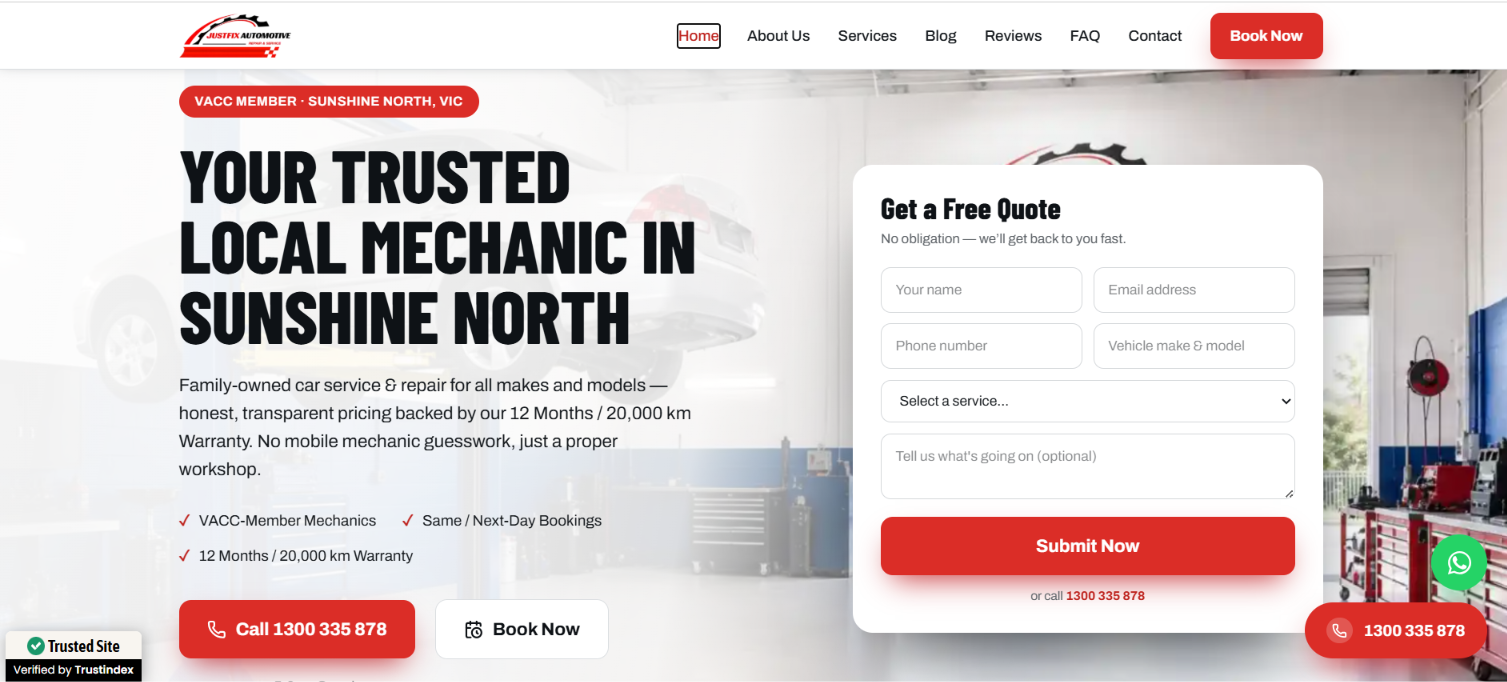
Designed and built a fast, user-friendly website for JustFix Automotive, a trusted mechanic workshop in Sunshine North, VIC. We executed a comprehensive on-page and technical SEO strategy optimizing site speed, local schema, and service-page architecture—to boost search rankings, capture high-intent local traffic, and drive online service bookings.

After the successful launch of the first website, the client partnered with Mana Studio again to develop a dedicated website for their Sirisilla branch.

A modern, SEO-optimized website designed and developed by Mana Studio for a professional packers and movers company. From UI/UX design to full-stack development, we built a fast, mobile-friendly, and conversion-focused website that helps generate leads, build customer trust, and strengthen the brand's online presence.

Pre-owned car dealership platform for a trusted dealer in Warangal — live inventory browsing, certified listings, and an installable PWA with offline access and instant new-arrival notifications

Comprehensive job portal for government job seekers with real-time updates and notifications
Why us
Not just the deliverable — the way the project runs.
One number agreed before we start, quoted in USD against a written scope. No hourly billing, no change-order for work that was always in scope.
Daily overlap with US Eastern, Central and Pacific. Calls at 9am your time, not 9am ours.
You talk to the people building it — no account manager relay, no translation gap.
Send yours or use ours, signed same-day at no cost. Your idea, code and data stay yours.
A dated proposal with scope, milestones and the final number. No hourly meter.
Code, designs, hosting, domains and logins handed over in full. Nothing is locked to us.
FAQ
Free 30-minute call. We'll tell you honestly which option fits — including when the answer isn't us.
Prefer to talk now? +91 86885 48048 — we call US numbers back same day.