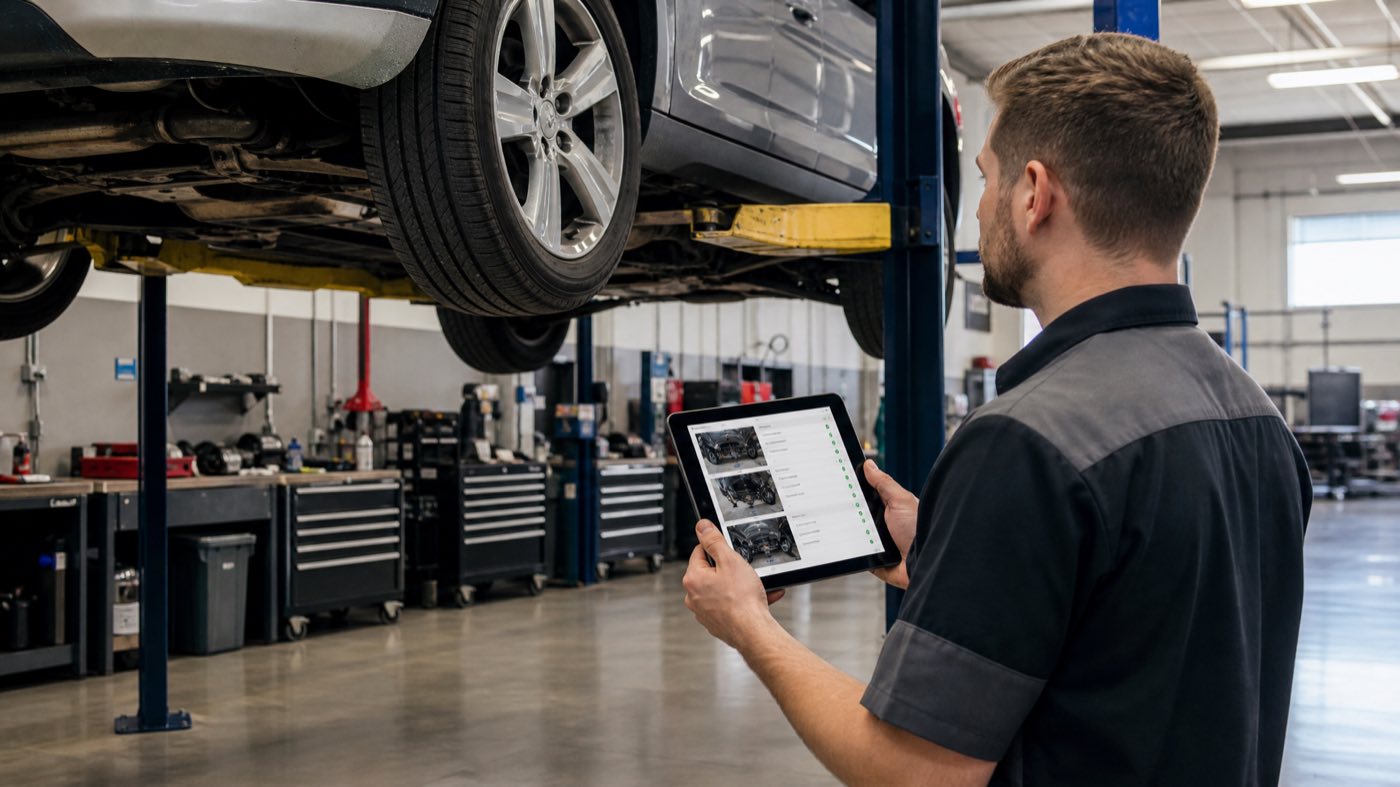
An independent auto repair shop competes against two things at once: the dealership service department with a marketing budget, and the chain down the road with a national ad campaign. Neither of them can beat you on trust — which is the only thing that actually decides where a car goes.
The problem is that trust used to travel by word of mouth and now travels through Google. This is how an independent US shop turns that around and fills the bays.
The searches that fill bays
Almost every new customer arrives through one of four search patterns, and they need different things from you:
- Urgent — "brake repair near me," "check engine light diagnostic," "car overheating shop." They need to know you are open, close, and can look at it today.
- Price-checking — "how much does a timing belt cost," "brake pad replacement price." They are deciding whether to trust the quote they already got somewhere else.
- Specialty — "transmission repair," "European auto specialist," "diesel truck repair," "hybrid battery service." Lower volume, much higher value, far less competition.
- Routine — "oil change near me," "state inspection." Low margin on its own, but it is how you acquire a customer whose brakes you will do next year.
Most shop websites address none of these. They have a homepage, an "About Us," and a list of services in a paragraph.
Own the map results
"Auto repair near me" produces a map block of three shops, and proximity plus reviews decide it. What to fix:
- Primary category "Auto Repair Shop," with secondaries for your specialties — Transmission Shop, Brake Shop, Auto Electrical Service, Smog Inspection Station, whatever applies.
- Every service listed individually, plus the makes you specialise in. "European auto repair" is a category of customer, not just a service.
- Photos of the actual shop — clean bays, the lift, the waiting area, your techs. Customers are deciding whether they will be ripped off, and a clean, organised shop photographs as competence.
- Hours, including Saturday. Weekend availability is a real advantage over dealerships and it drives a specific search.
- Reviews, continuously. More on this below — in auto repair it is the whole ballgame.
The complete method is in our Google Map Pack guide.
Reviews are the entire trust mechanism in this industry
Americans approach auto repair expecting to be overcharged. That is the baseline you are working against, and reviews are the only thing that overcomes it before someone walks in.
What works specifically here:
- Ask at pickup, when the car is fixed and the bill was what you said it would be. Text the link before they drive away.
- Ask everyone, not just the big jobs. Oil change customers write reviews too, and volume with recency is what ranks.
- Reply to the negative ones properly. Calm, specific, non-defensive, and offer to make it right. This single behaviour persuades more prospective customers than a wall of five stars, because everybody reads the one-star reviews looking for how you handle a dispute.
- Never argue about a diagnosis in public. Move it to a phone call in one sentence.
Full system: how to get more Google reviews.
Transparency is your competitive weapon
The reason people distrust shops is information asymmetry — you know what the car needs and they do not. Every step you take to close that gap converts directly into business.
Digital vehicle inspections
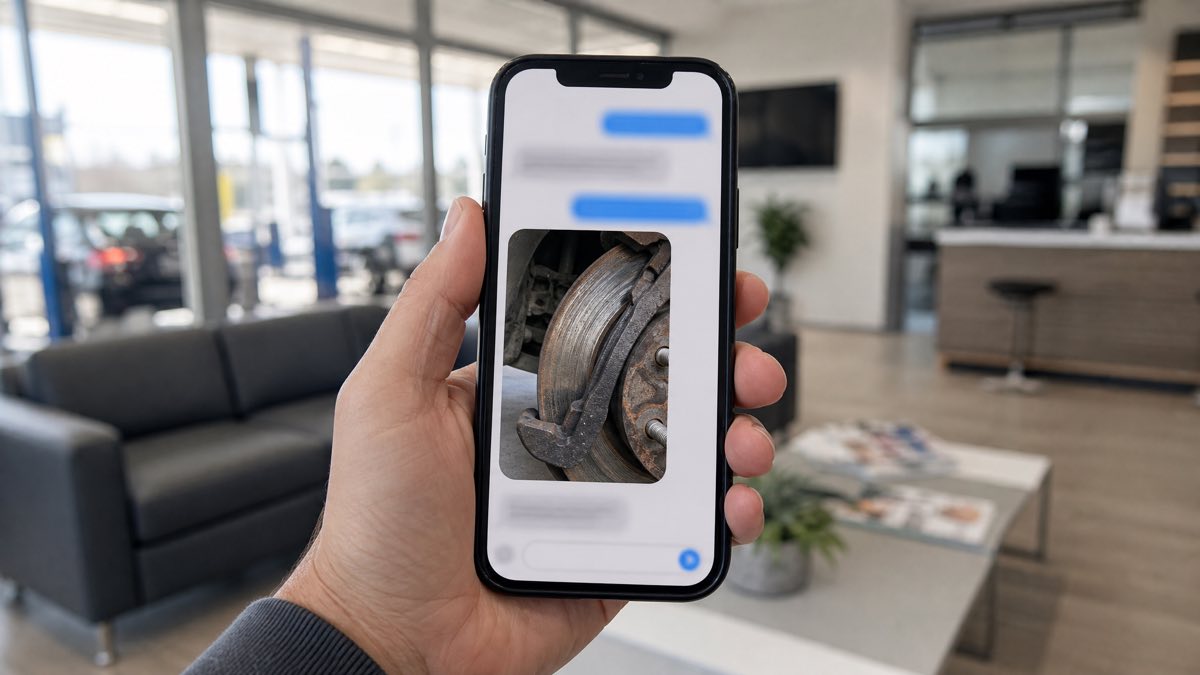
Photos and short videos of the actual worn part, texted to the customer with the recommendation. It removes the "are they making this up" question entirely, and shops that adopt it consistently report higher approval rates on recommended work. It is also the single best content you have — with permission, it makes excellent social video.
Published price ranges
Put ranges for your common jobs on the website — brakes, alternator, timing belt, diagnostics fee. Shops resist this and customers search for it constantly. The shop that publishes a range gets the call from the customer who was quoted a number elsewhere and wants a sanity check.
Warranty stated up front
Parts and labour, duration, nationwide coverage if you are part of a network. This is a genuine differentiator against a cheaper competitor.
Specialty pages are where the margin is
General "auto repair" searches are crowded and low-margin. Specialties are neither. If you do any of these, they each deserve their own page:
- Transmission repair and rebuilds
- European makes — the specific brands you are equipped for
- Diesel and fleet service
- Hybrid and EV service, which is growing fast and thinly served by independents
- Classic and restoration work
- Fleet maintenance contracts for local businesses — steady, scheduled, recession-resistant work that almost no shop markets for
Fleet deserves special mention. Local plumbers, landscapers, delivery companies and contractors all run vehicles and all need a shop. One page targeting "fleet maintenance [city]" plus a few direct conversations can change the shape of a shop's revenue.
Keep the customers you already have
Acquiring a new customer costs many times more than bringing an existing one back, and most shops do nothing between visits.
- Service reminders by text based on mileage and last visit. Simple, cheap, and it works.
- Follow up on declined work. The customer who deferred the brakes in March needs them in July. A polite reminder converts a meaningful share of deferred jobs.
- State inspection and registration reminders, where your state requires them.
- A win-back message to anyone you have not seen in 12 months.
What it costs to set up properly
A shop website with service pages, specialty pages, price ranges, appointment requests and review integration starts at $499 with us — see auto repair shop websites and the US website cost guide. Ongoing local SEO is $299/month, and a $129 audit will tell you where you stand before you spend anything.
Frequently asked questions
Should I publish repair prices on my website?
Publish ranges, with the variables that move them — vehicle, parts quality, labour hours. It filters out price-only shoppers you did not want and earns trust from the ones you did. The customer who was quoted $1,400 at a dealership and finds your honest $700–$900 range will call you.
How do I compete with dealership service departments?
On price transparency, on convenience, on being reachable, and on the map results for your neighborhood — dealerships are not optimised for "near me" searches in the suburbs around them. Also on specialisation: a shop known for one make beats a generalist dealership counter for that make's owners.
Is Google Ads worth it for an auto shop?
For urgent and high-value services, yes — "brake repair," "transmission repair," "check engine light." For "oil change," rarely: the margin does not support the click price in most US markets. Let organic and the map results carry the routine work.
How many reviews does a shop need to compete?
Match the three shops currently in your local map block, then beat their recency. In most US suburbs that is 100–300 reviews with new ones arriving every week. Recency matters as much as total.
What is the fastest improvement a shop can make?
Digital vehicle inspections with photos texted to the customer, plus a review link sent at pickup. Together they raise approval rates on recommended work and build the review base that brings the next customer in. Neither requires a website change.
This week
Set your categories, list every service and specialty, upload twenty photos of the shop and the team, and start texting a review link at every pickup. Then build the pages for the specialties that actually pay.
See what we build for US auto repair shops, or message us on WhatsApp or at team@manastudio.in.