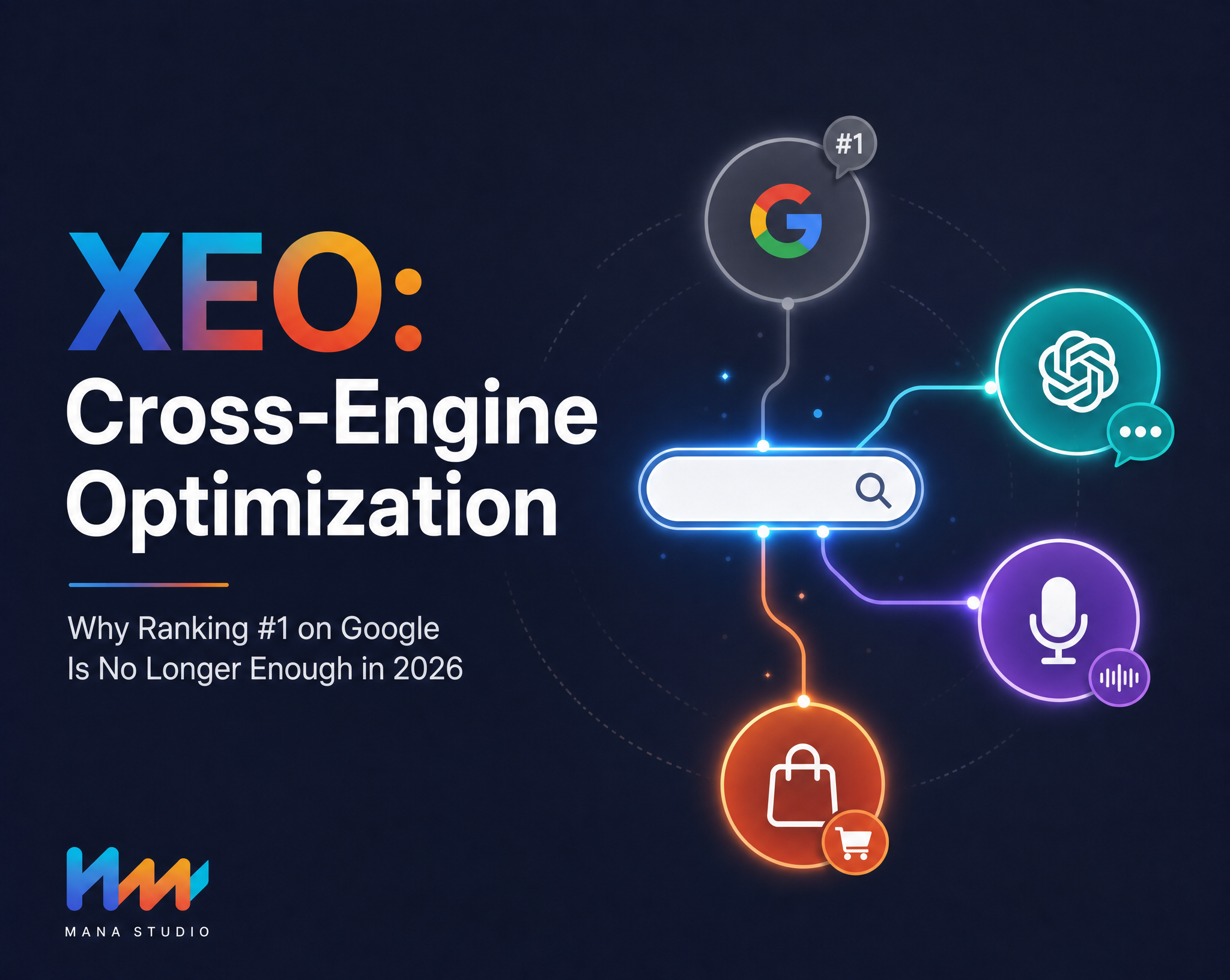
A real GEO workflow isn't a daily content sprint. Practitioners report better results from weekly cycles: audit your technical foundation, test your business directly inside ChatGPT and Gemini, publish 2-3 deep articles instead of five thin ones, and track what's already getting cited. Google itself now says GEO is "still SEO" (Search Engine Journal, 2026) so the fundamentals you already know still carry most of the weight.
If you've searched "GEO services" in the last few months, Business owners in India are asking us the same question almost every week: does GEO actually need a separate, expensive system, or is it something that fits inside the SEO you're already paying for? We dug into how working SEOs and marketers describe their actual day-to-day GEO process, then cross-checked it against Google's own published guidance. The gap between the two is the most useful thing in this article.
Is GEO Really a Different Discipline From SEO?
Short answer: not as much as the marketing around it suggests. In May 2026, Google Search Central published official guidance stating that optimizing for AI Overviews and AI Mode is still SEO, not a separate framework requiring new tools (Google Search Central, 2026). If your business already ranks well because of solid content, clean technical setup, and real expertise signals, you've already done most of the work GEO asks for.
This doesn't mean GEO is a myth AI referral traffic to small business websites has grown sharply in the past year, and businesses that ignore it are leaving visibility on the table (HubSpot, 2026). It means GEO is best treated as a layer on top of your SEO, not a separate budget line. We've written a full breakdown of SEO vs AEO vs GEO if you want the deeper comparison this article focuses on what to actually do about it, week to week.
What Does a Real GEO Workflow Actually Look Like?
Going by how working SEOs describe their weeks in industry forums, the common thread is this: testing and structure take up most of the time, and publishing is a smaller, more deliberate slice at the end. Here's how that breaks down into steps you can run yourself.
1. Audit Your Technical and Schema Foundation First
Before writing a single new page, check what's already on your site. Inconsistent HTML structure and schema markup that contradicts your visible content are two of the most common reasons AI engines skip a page entirely and schema that's wrong can hurt you more than having none at all. If you haven't touched your website's structure in a while, this is also a good moment to check whether your website itself needs an update, since a slow or poorly coded site undermines every other GEO effort.
2. Choose Quality Over Daily Publishing
The biggest mistake we see is businesses trying to publish daily to "feed the algorithm." Practitioners running successful GEO programs report the opposite works better: 2-3 genuinely thorough articles a week, each answering one real customer question in depth, consistently outperform five generic posts. Start with the actual questions your customers ask on WhatsApp, in calls, or in local Facebook groups not just a keyword list.
3. Test Your Business Directly Inside ChatGPT, Gemini, and Perplexity
This is the step almost every experienced practitioner mentions, and it's the one most local businesses skip. Open ChatGPT, Gemini, and Perplexity and type the exact questions your customers would ask "best digital marketing agency in Hyderabad for small business," for example. See who gets mentioned, which pages get cited, and what's missing from your own site. This takes under 20 minutes and tells you more than most paid tools.
4. Track What's Already Working Before You Build Anything New
Pull your Google Search Console data and look at which pages are already getting impressions and clicks. The pages already earning visibility are the ones worth strengthening first adding FAQs, tightening the opening paragraph, fixing thin sections rather than starting five new pages from zero.
5. Don't Skip Off-Page: PR, Mentions, and Citations
If AI engines keep citing review sites, directories, or industry forums instead of your own pages, no amount of on-site publishing fixes that gap. Responding to relevant journalist queries, getting listed accurately across Google Business Profile, JustDial, and Sulekha, and earning a handful of genuine mentions from sites in your industry all feed into how confidently AI systems recommend you.
What Google Itself Says You Don't Need to Worry About
This part matters because it can save you real money. Google's own AI optimization guidance explicitly lists tactics it says site owners can skip for Google Search: creating llms.txt files, rewriting content specifically for AI tools, chasing "content chunking," pursuing inauthentic brand mentions, and adding special AI-only schema markup (Search Engine Journal, 2026). Several of these are exactly what some "GEO packages" charge extra for. If an agency leads with those as the core of their offer, ask what they're doing instead for your actual SEO and content foundation.
Why Hyderabad, Warangal & Vijayawada Businesses Have a GEO Advantage
Here's the part most national guides miss: location-specific queries face far less competition in AI search than broad national terms. A business with one detailed, honest page about "AC repair in Warangal" or "wedding catering in Vijayawada" can get cited by ChatGPT ahead of a generic national directory with thousands of thin listings. We've covered this in more depth in our guide to local SEO for Hyderabad businesses the same fundamentals (service-and-city pages, consistent NAP details, real reviews) feed both Google's local results and AI citations.
This also matters for Telugu-speaking business communities specifically. AI engines pull from whatever content exists about your business and your competitors. If competitors have published service-area pages and you haven't, that gap shows up in AI answers just as clearly as it does in Google rankings.
A Simple Weekly GEO Checklist You Can Start This Month
- Monday: Run 5-10 real customer questions through ChatGPT, Gemini, and Perplexity. Note who's cited and what's missing from your site.
- Tuesday-Wednesday: Check Search Console for pages already getting impressions. Strengthen one with a clearer opening answer and an FAQ block.
- Thursday: Write or update one in-depth page that answers a real customer question not a keyword, a question.
- Friday: Spend 30 minutes on outreach a review request, a directory listing fix, or a reply to a relevant query in your industry.
- Monthly: Re-run your Rich Results Test to confirm schema still matches your visible content, especially after any website changes.
If you're working through a broader online presence overhaul rather than just this checklist, our guide to building a complete online presence for small businesses in India walks through the bigger picture.
Should You DIY This or Bring in Help?
The checklist above is genuinely doable on your own if you have 3-4 hours a week to spend on it consistently. Where most business owners struggle isn't understanding the steps it's finding the time alongside running the actual business. If you'd rather see where you currently stand before deciding, start with a free SEO and GEO audit; it'll show you exactly which of the gaps above apply to your site.
How Mana Studio Builds GEO Into Every SEO Engagement
We don't sell GEO as a separate, mysterious add-on. At Mana Studio, GEO is built into our standard SEO and digital marketing services starting at ₹20,000 because the underlying work (technical health, schema accuracy, real local content, structured FAQs) is the same foundation that wins both Google rankings and AI citations. For businesses across Hyderabad, Warangal, and Vijayawada, that means one revenue system instead of three separate vendors for "SEO," "GEO," and website work.
If your website itself needs rebuilding before any of this can work slow load times and broken mobile layouts undercut everything above — our website development plans start at ₹8,000 and are built with this exact foundation in mind from day one.
The Bottom Line
GEO isn't a reason to panic, and it isn't a reason to pay for a separate "AI SEO" retainer either. It's a weekly discipline: audit your technical foundation, test your visibility directly inside AI tools, publish fewer but better pages, and fix the gaps the data actually shows you. Local businesses that start this now will be the ones AI tools default to recommending by the time most competitors notice the shift.
Ready to see where your business stands in AI search right now? Call us at +91 8688548048 for a free consultation, or visit www.manastudio.in to get your free SEO & GEO audit.
Frequently Asked Questions
1. What is a GEO workflow for a small business?
A GEO workflow is a recurring routine usually weekly of auditing technical and schema health, testing your business inside tools like ChatGPT and Perplexity, publishing focused content, and tracking which pages already get AI citations before building new ones.
2. Is GEO different from SEO, or part of it?
Google's own 2026 Search Central guidance states that optimizing for AI Overviews and AI Mode is still SEO, not a separate discipline requiring new tools or special markup (Google Search Central, 2026). For Google specifically, a strong SEO foundation does most of the GEO work already.
3. How often should I publish content for GEO to work?
There's no fixed number, but practitioners consistently report that 2-3 deep, well-researched articles a week outperform daily generic posts. Quality and a clear answer to a real customer question matter more than volume.
4. Do I need special schema markup or an llms.txt file for AI search?
No. Google explicitly says site owners can skip llms.txt files, AI-specific content rewriting, and special AI-only schema for Google Search (Search Engine Journal, 2026). Standard, accurate schema that matches your visible content is what actually helps.
5. How much does GEO cost for a small business in Hyderabad or Telangana?
Because GEO overlaps heavily with SEO, it doesn't need to be a separate budget line. At Mana Studio, GEO-ready practices are included in standard SEO packages starting at ₹20,000, rather than billed as a separate "AI search" retainer.